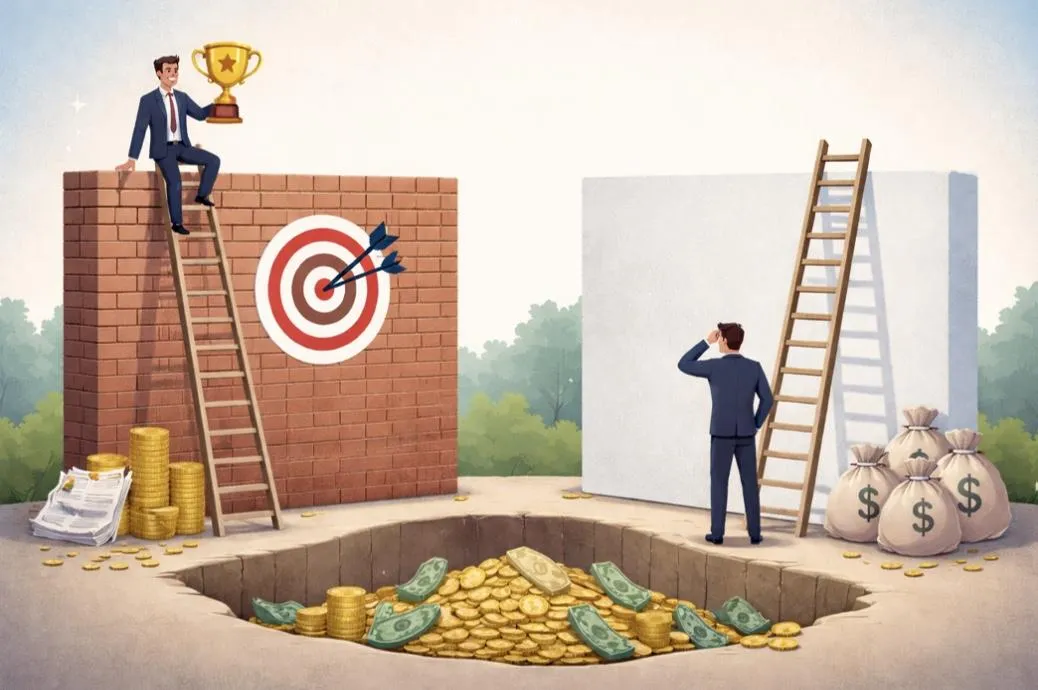
The Cost of Solving the Wrong Problems
The Hidden Risk of Success
Here's something that doesn't get talked about enough: Most companies don't fail because they stopped trying. They fail because they got really good at what’s now the wrong thing.
The team is solid. Processes are tight. Delivery is consistent. You're hitting your numbers, running cleaner than ever, and doing all the things a well-run company is supposed to do.
And yet, growth starts to feel harder than it should.
Deals take longer to close. Customers are asking different questions. Margins are getting squeezed. Competitors you weren't worried about are suddenly getting attention you used to get. You're working just as hard, maybe harder, but the results don't quite match the effort anymore.
This is one of the most dangerous places a business can be. Not because things are falling apart. But because they still look fine.
When Getting Better Isn't Enough
There's a real confidence that comes from improving your business. Faster turnaround. Cleaner operations. Better reporting. Lower costs. And those things matter - don't get me wrong.
But here's the problem: Improvement isn't the same as relevance.
You can get more efficient at delivering something the market cares less about than it used to. You can tighten up your model around assumptions that are quietly going stale. You can keep optimizing last year's answer while your customers are already moving toward a different question.
That's the trap. You're still getting better - but you're getting better at yesterday's version of the business.
Why It's So Hard to Catch
This ‘strategic drift’ doesn't show up with a flashing warning light. It sneaks in gradually.
Customers start using different language. What used to be a differentiator becomes an expectation. New competitors show up and frame the problem differently. They start winning attention, not because they're more capable, but because they're more in sync with where the market is heading.
Inside your company, though, everything still looks reasonable. The team's busy. Metrics are tracking. Your existing clients are mostly happy. Nothing feels urgent enough to stop and really rethink things.
That's exactly why it's dangerous. It's subtle enough to brush off. Until it's too late.
The first warning signs usually aren't dramatic. They look like this:
Sales cycles getting longer for no obvious reason
Prospects seem interested but never quite have urgency to commit
More price pressure than in the past
A feeling that you're working harder for outcomes that used to come easier
Those aren't just sales problems. They're signals that something's shifting.
The Questions Most Leaders Avoid
Resilient companies don't just improve their operations. They step back regularly and pressure-test their assumptions. That means asking questions that can feel uncomfortable:
What problem are we actually solving for our customers right now?
Is that problem still urgent enough that they'll prioritize it?
Is the market shifting how it defines success - and are we shifting with it?
Are we building around real current demand, or mostly momentum from what worked before?
These aren't abstract questions. They're the ones that separate companies that remain relevant from the ones that drift to irrelevance while looking busy.
Leadership isn't just about driving execution. It's about occasionally challenging why you're executing on what you're executing on. Because strong performance only means something if achieved with the right target.
One of the most important things a leader can do is question things others have quietly stopped questioning.
Staying Relevant Takes More Than Working Harder
Relevance isn't something you preserve by grinding harder. It's something you preserve by staying honest with yourself and with your team.
The companies that do this well don't wait for a crisis to force the conversation. They adjust while they still have momentum, options, and credibility in the market.
The exercise can actually be fun - and energizing. It takes a certain kind of humility. A willingness to say, "We're doing this really well - but is this still the best thing to be doing?"
Being excellent at the wrong thing isn't a minor issue. It creates false confidence. It keeps your team heads-down and busy. It makes internal performance look stronger than your actual position in the market.
And by the time the gap becomes obvious, you may have spent years optimizing something your customers have already started moving past.
The market doesn't care how hard you worked. It cares whether what you're doing still matters to the people you're trying to serve.
That's the real question worth asking.
If progress and growth are stalling and this message resonates, the question may not be whether your team is executing well.
But whether you’re still delivering the right things.
Markets rarely shift all at once. More often, they drift quietly. Businesses that remain relevant are the ones with leaders who are willing to challenge assumptions before the numbers force the issue.
If you want an objective perspective on where your strategy may need recalibration, schedule a Free Value Growth Strategy Session here:
https://calendly.com/tim-rmc/value-growth-strategy-call

Clear Growth Advisors is a business growth advisory firm dedicated to helping owners and leadership teams make their companies:
More profitable,
More valuable
Easier to run
Explore how Clear Growth Advisors can help your business gain momentum: https://cleargrowth.us